
Preparing your home before professional painting services arrive is important for a smooth, long-lasting finish. Cleaning surfaces, moving furniture, protecting belongings, and handling small repairs help painters deliver quality results.
This attention to detail makes the painting process faster and safer. It also reduces disruption for your family.
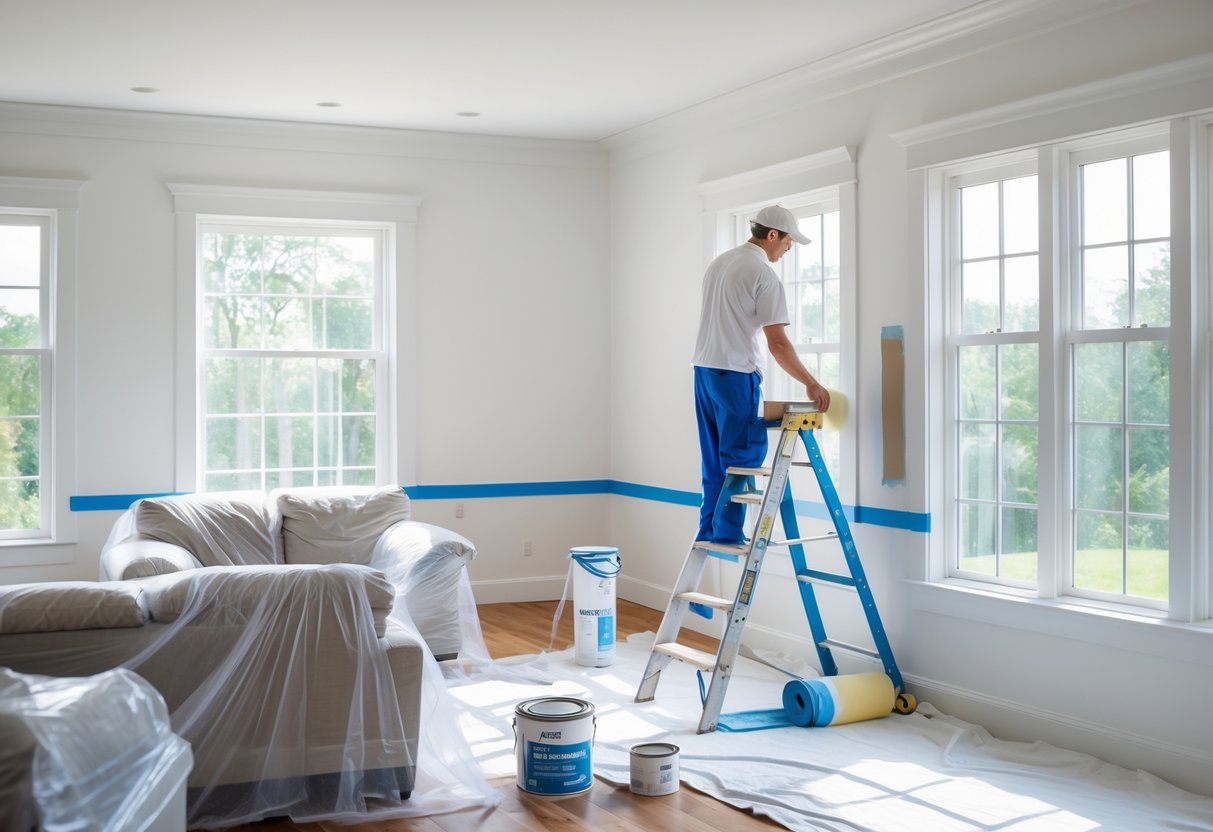
At Painting Contractors Centurion, we understand the local climate and building materials in Centurion, South Africa. We offer advice for prepping your home’s walls, ceilings, or exterior surfaces.
Simple steps like clearing outdoor areas, trimming plants, or removing wall decorations prepare the space for our workers. These actions also help protect your property during the job.
For a more detailed checklist, you can review these steps to prepare for painting.
Essential Preparation Steps for a Professional Paint Job
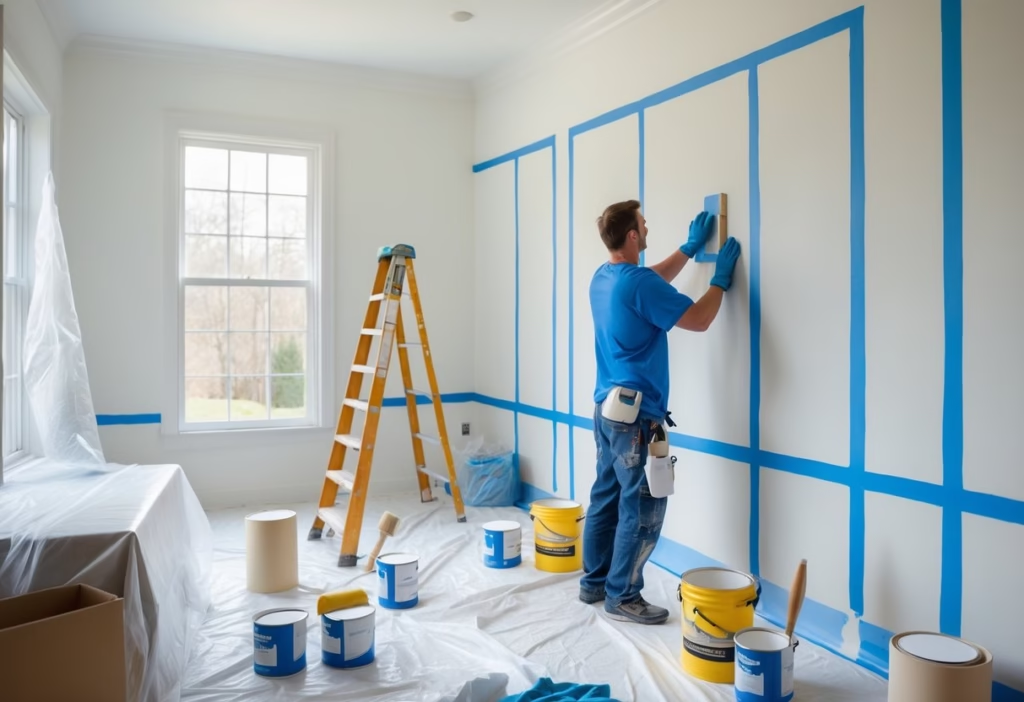
A clean and organized area helps us achieve the best results during the painting process. Following these steps improves the finish and makes the work more efficient.
Clear and Protect the Painting Area
Start by moving furniture away from the walls so painters have space to work safely. Place heavy items in the center of the room and cover them.
Use drop cloths to protect floors and furniture from paint and dust. Tape plastic sheets over entryways, doorways, and vents to keep dust and paint contained.
Keep pets and children away from the work area. This keeps them safe and helps us work quickly.
Remove Wall Hangings and Fixtures
Take down wall hangings like artwork, family photos, clocks, and mirrors. Remove curtain rods, switch plates, outlet covers, and light fixtures if possible.
If some fixtures cannot be removed, cover them with tape or plastic. Empty walls prevent accidental drips or bumps from damaging your belongings.
This step also reveals nail holes or damage that may need repair. Fixing these areas helps achieve a smoother finish.
Clean the Walls Properly
Clean walls help paint stick better and last longer. Dirt, oil, and dust can cause paint to peel or look uneven.
Wash walls with mild detergent and water, especially near doors, switches, and trim. For greasy spots, use a stronger cleaner safe for painted surfaces.
Let the walls dry completely before painting. Skipping this step can affect the paint job.
See more cleaning tips in this painting guide.
Address Surface Repairs and Priming
Flaws in a wall can show through new paint. Fill small cracks, dents, and nail holes with the right patching compound.
Scrape away peeling paint and sand the area until smooth. Once repairs are dry, apply a primer suited for your wall surface.
Priming covers stains, evens out color, and helps paint stick better. Use painter’s tape on edges, trim, and fixtures for clean lines.
Ensuring a Smooth Painting Experience
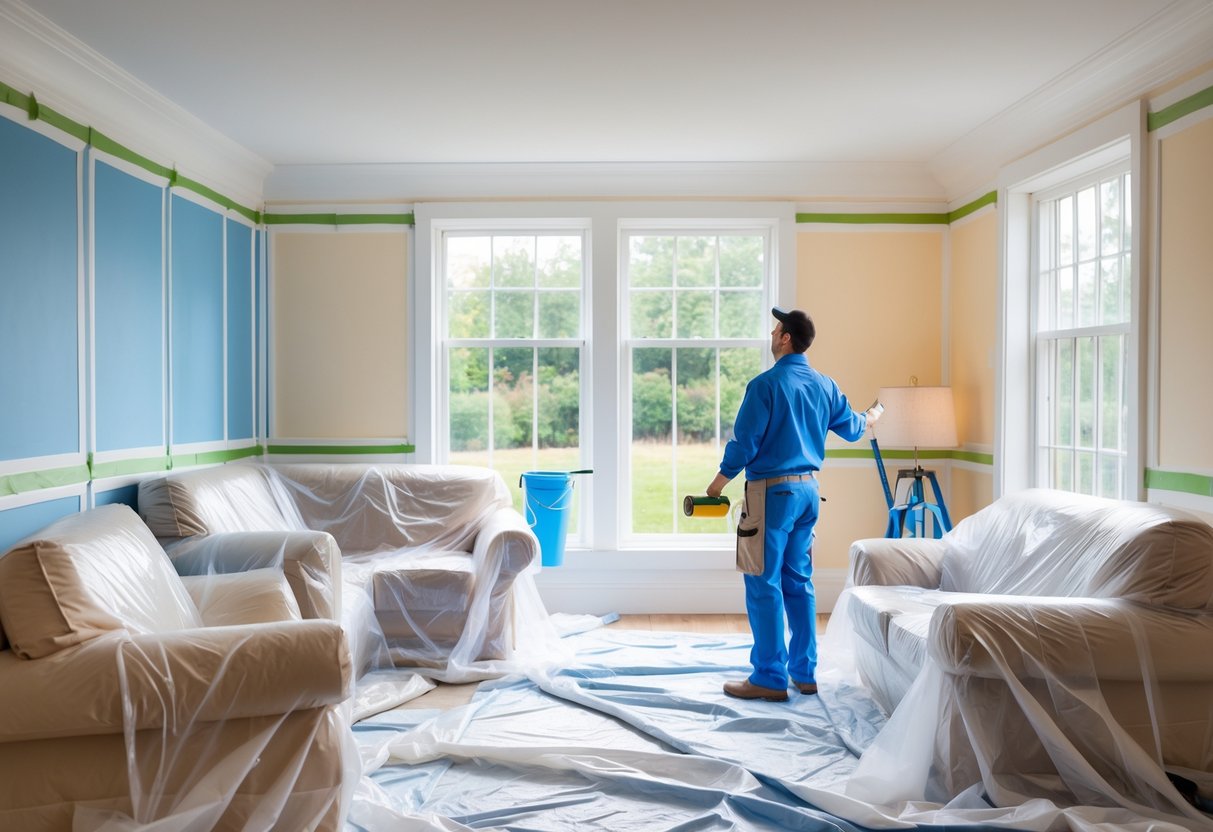
Professional painting goes smoothly when you plan ahead. Focus on keeping workspaces clear and communicating with your painting team.
Provide Clear Access and Safe Workspaces
Make sure all work areas are open and free from clutter before painters arrive. Move furniture away from walls and cover delicate items.
Remove wall hangings, curtains, and blinds. Store fragile objects or electronics in a safe place.
Keep walkways and rooms clear so our team can set up ladders and tools safely. Clear outside paths if doors or windows need painting.
Prepare Pets and Children for the Process
Keep pets and children safe and away from the work area. Paint smells and wet surfaces can be harmful or cause accidents.
Set up a separate room, outdoor area, or arrange for pets and children to stay elsewhere during painting. Use child gates or closed doors to block off work areas.
Let everyone know which rooms are off-limits until the paint dries. Keep pets’ food, water, and toys in their safe spot.
If painting lasts more than a day, try to keep routines as normal as possible. Arrange for extra supervision if needed.
Communicate Effectively with Your Painters
Clear communication helps us deliver the results you want. Discuss which rooms to paint, your preferred colors and finishes, and any areas that need repair.
Let us know about your family’s routines and times that work best for you. Walk through the space with our crew leader to point out problem areas.
Ask for a schedule and mention any important events or times you need quiet. Good communication keeps everyone informed.
Frequently Asked Questions
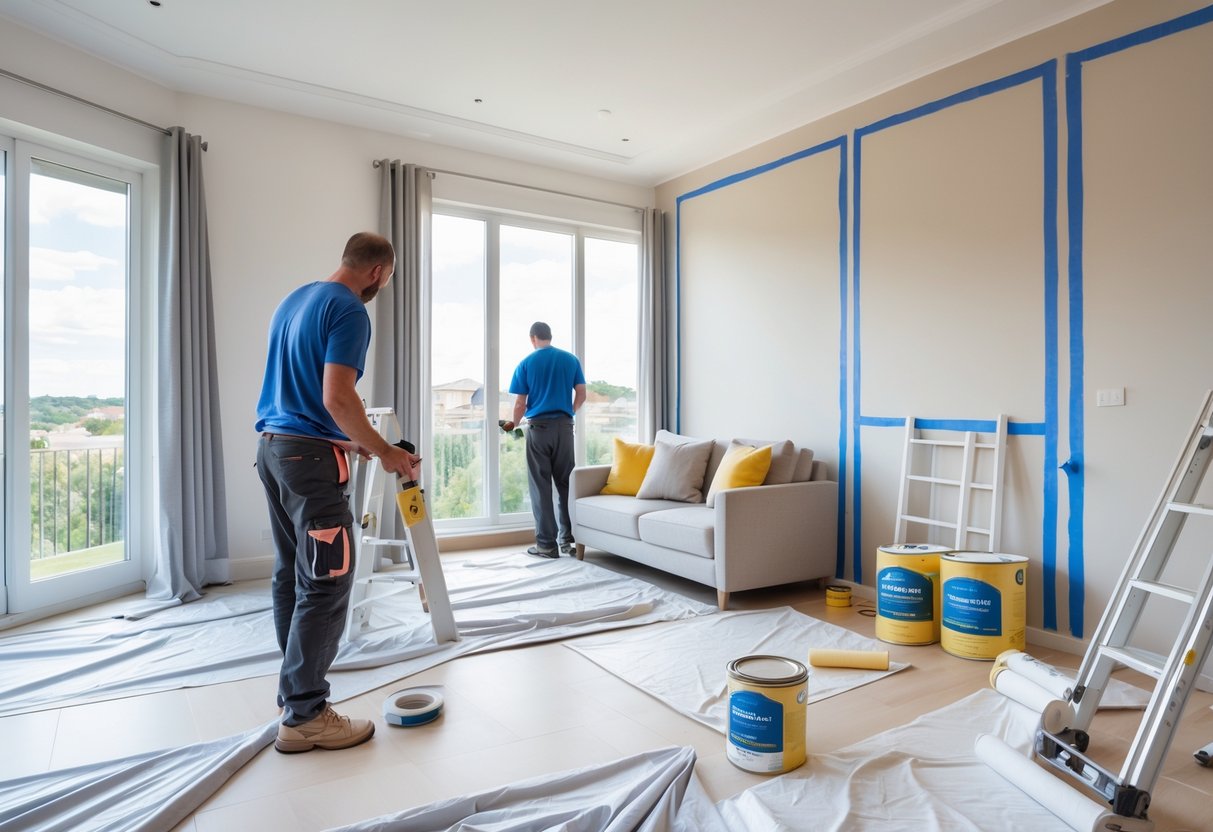
Preparing your home for painting protects your belongings and surfaces. Planning for temperature, weather, and clear communication supports better results.
What steps should I take to protect my furniture before interior painting begins?
Move furniture away from walls and into the center of the room. Cover items with drop cloths or plastic sheets.
Remove valuable or delicate items from the work area. Uncover electrical outlets and switch plates to speed up the process.
How do I ensure my exterior surfaces are ready for painting?
Check exterior walls for cracks, peeling paint, or mold. Clean surfaces with a pressure washer to remove dirt.
Trim shrubs and cut grass away from the house. This makes it easier for painters to work and keeps plants safe.
What temperature and weather conditions are ideal for exterior painting?
Paint when temperatures are between 10°C and 30°C. Dry weather for at least 24 hours before and after painting is best.
Avoid painting in humid or rainy conditions. This can delay drying and affect the paint’s appearance.
Are there specific materials or tools I should have on hand for painters?
You do not need to provide paint, brushes, or equipment. Our team at Painting Contractors Centurion brings all necessary tools.
Providing access to water and electricity helps us work efficiently. Clear entryways and secure pets before we arrive.
How can I best communicate my vision for the project to the painting team?
Discuss your preferred colors, finishes, and any special requests before we begin. Show reference photos or samples to avoid misunderstandings.
Walk through the space with us before we start. This helps point out problem areas and ensures your expectations are clear.
What safety precautions should be taken during the painting process?
Keep children and pets out of work areas to ensure their safety. Make sure walkways are clear.
Only the painting team should use ladders or equipment. Allow for proper ventilation when painting indoors to reduce fumes.
Our painters follow industry safety standards. They use personal protective equipment when needed.